 COME
COMERead a COME Item Before Opening an Activity: An Orientation Before Participation
Separate an item name and artwork from the instructions and conditions that govern the activity. You are new to the COME game catalogue and want to learn the layout before deciding on an activity.
A card identifies an item
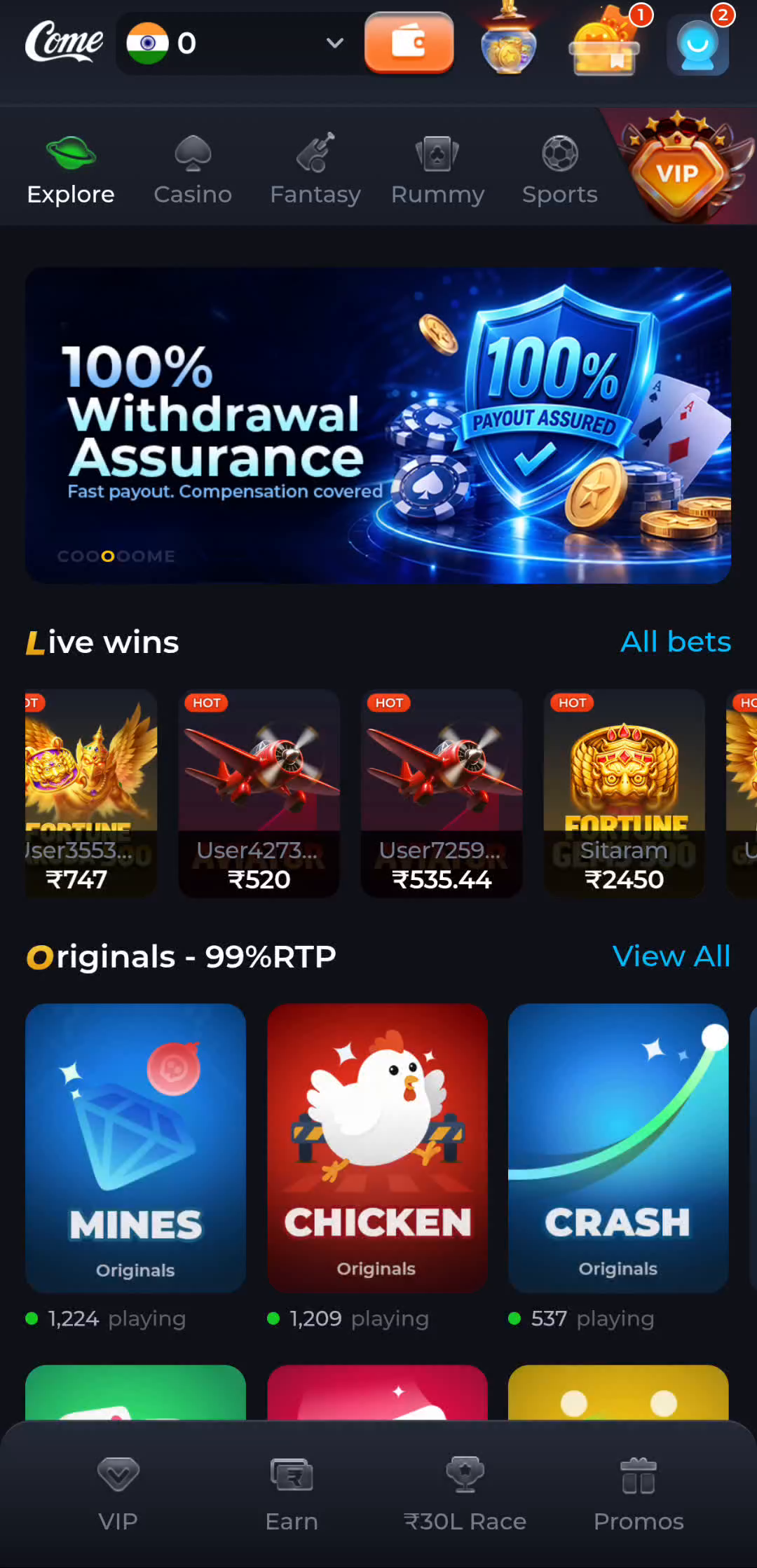
A catalogue card normally combines a name, image and action area. In the COME home illustration, Mines, Chicken and Crash appear in an Originals row. The names help you distinguish items. The artwork does not explain complete mechanics, prices, eligibility or the consequences of every control.
Begin by reading the item name and the surrounding category. Then locate the item's own description or instructions through the controls actually available. Do not assume that a familiar picture means the rules are the same as another product you have used. Similar names can still require separate reading.
Read the action before using it
Identify whether a control opens information, begins participation, confirms a choice or takes you elsewhere. Use the wording and current screen context to make that distinction. If the action is unclear, pause and return to the relevant information or help topic. Repeatedly tapping a control is not a reliable way to discover its purpose.
Where lawful participation involves money, read the amount and conditions before committing and stay within a limit you can afford to lose. Entertainment should not be treated as income. A promotional amount shown in an illustration is not a credit in your account or a guarantee about a future outcome.
Keep each rule with its item
A category groups entries; it does not make their rules identical. Read any applicable instructions, timing and eligibility on the current item. Keep the version of the information and the specific activity together when asking a question. A general guide cannot replace the conditions shown for your actual choice.
The same distinction applies to sports-related cards. A cricket image might introduce information or an activity, but it does not confirm video access or a fantasy scoring table. Read the screen's purpose and event details. Do not infer the full service from a player's image or a tournament-style graphic.
Return safely to orientation
An orientation visit can end after reading the item and locating the return control. Before navigating away from an operation, inspect whether it is pending or complete. Use the relevant record or help route if the result is uncertain, and avoid repeating an action merely because its first result was slow.
If you need assistance, name the item, the exact control and what happened. Remove private account details from public screenshots. That description is more useful than a broad statement that all games fail, and it keeps a specific question attached to its actual context.
Apply this check to your visit
You are new to the COME game catalogue and want to learn the layout before deciding on an activity.
First locate the category row and the individual cards. Read the item's information and identify how to return to the catalogue. Keep the visit small and pause when a screen is unclear. Understanding navigation is useful on its own; a new visitor does not need to test every activity to learn the app.
The checkpoint for this guide is specific: separate an item name and artwork from the instructions and conditions that govern the activity.
- Read the category and item names.
- Locate the actual item information.
- Understand the control and conditions before acting.
- Use the visible return route after inspection.
Two cards in the same row remain different items; an instruction for one should not silently become the rule for both.
Questions about this task
Does a card give complete rules?
No. Read the individual item information and current conditions.
Must I start an activity to learn the catalogue?
No. Reading the layout and item information is a valid orientation task.
A related next step
Finish one small orientation task before adding another. You are new to the COME game catalogue and want to learn the layout before deciding on an activity.
COME First-Session Plan: An Orientation Before Participation